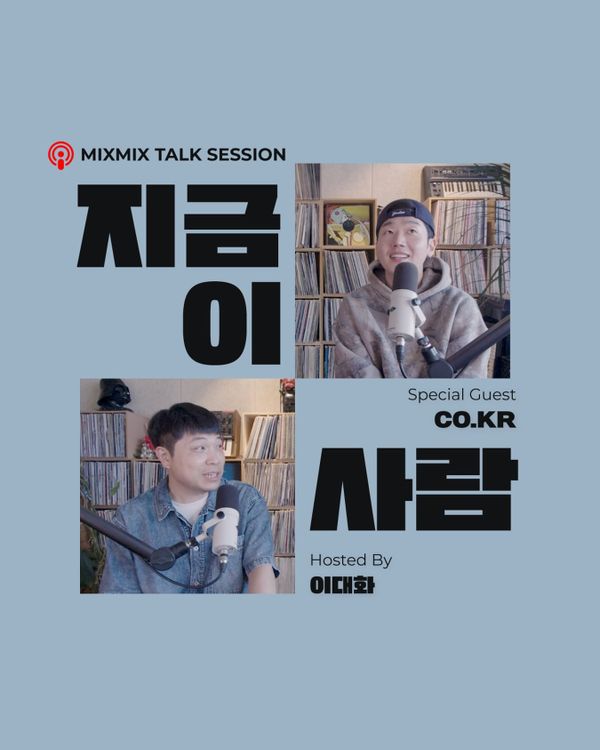
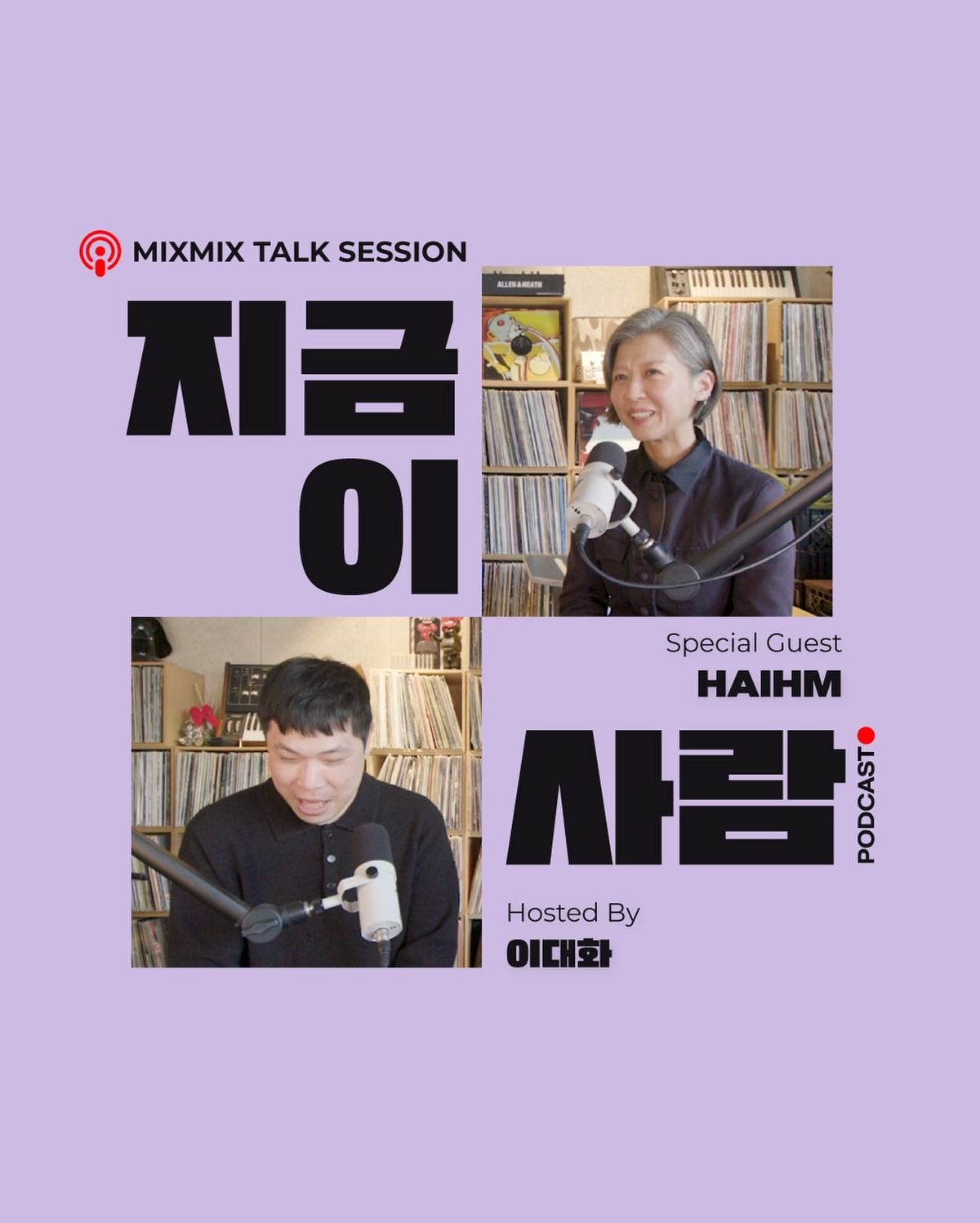
HAIHM | MIXMIX TALK SESSION 017

Watch the Talk Session
FLOW FORM and the discipline of subtraction
Hosted by LEEDAEHWA
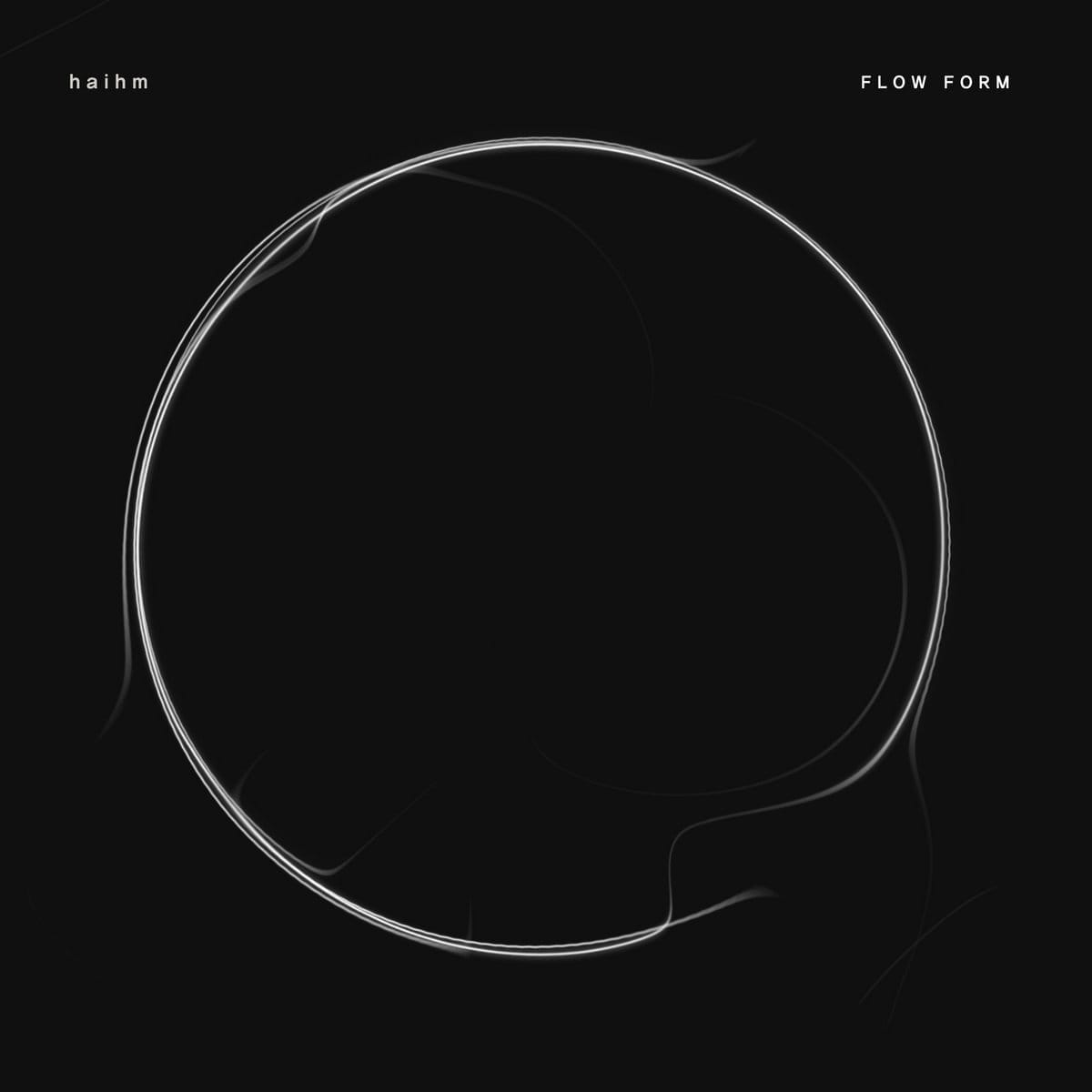
A month after releasing FLOW FORM, HAIHM was still buried in paperwork. Grant settlements with the Seoul Foundation for Arts and Culture, exhibition leaflets to restock, a compilation release through Sangsu Records. The music had already left his hands. The administration hadn't.
The Wrong Kick
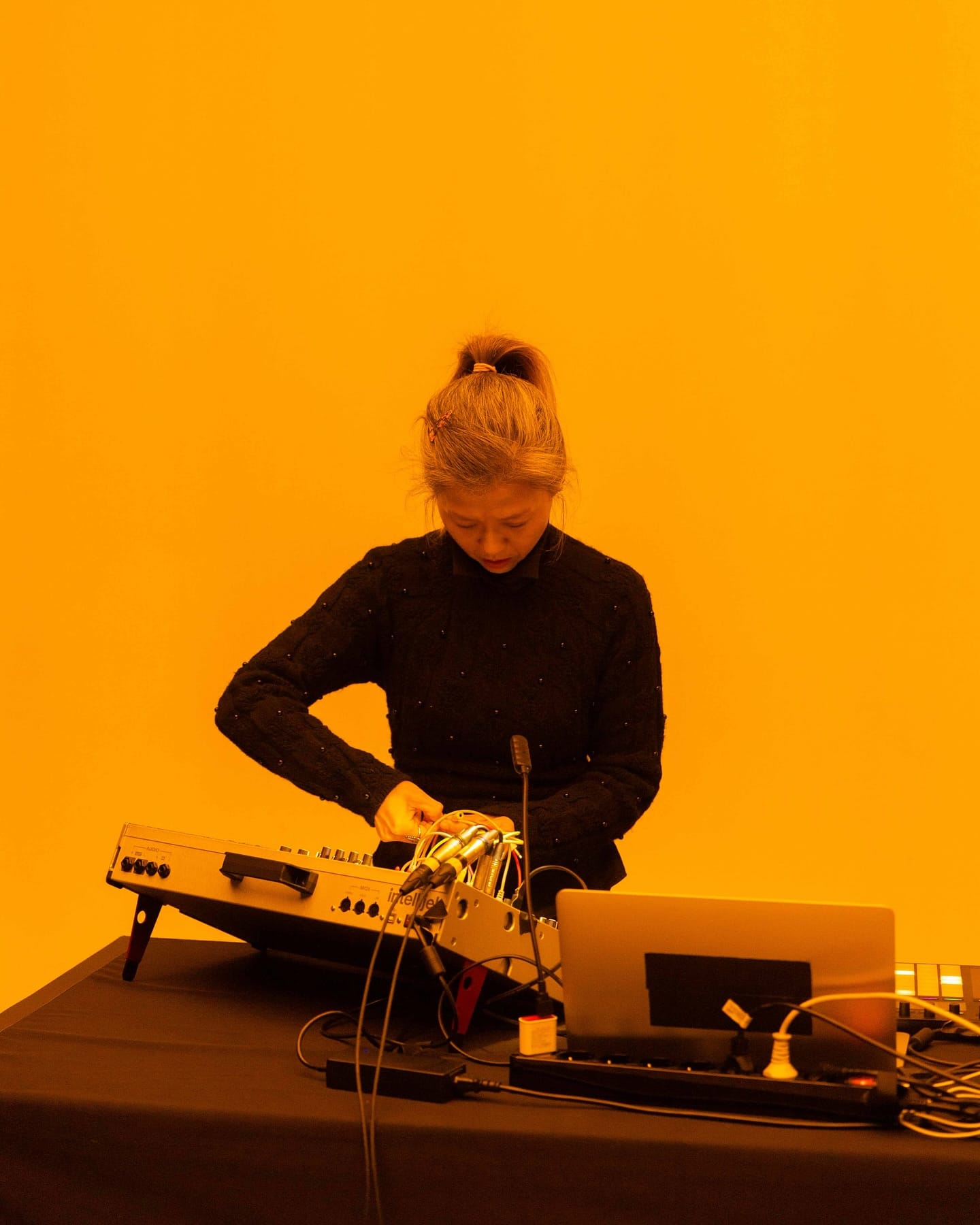
He hadn't planned to make music. He'd studied piano seriously enough to study abroad, and when that chapter closed, he thought about becoming an engineer — someone who works with sound rather than creates it. What redirected him wasn't a genre or a scene. It was a single moment of hearing a kick and snare replaced by something clattering and unidentifiable inside an otherwise conventional song. "That was so interesting to me," he said. "I'd never heard anything like it." The pull was toward the sound itself, not the form it came in. That distinction has governed everything since.
Confident Enough to Be Uncertain
When composer Yoo Hee-yeol called HAIHM "Korea's greatest sound designer" in press materials for Point 9, the response wasn't pride. "I was flustered," he said. "I'm always uncertain about sound." He mastered FLOW FORM five or six times over. The irony holds: the more his work has stripped back — fewer beats, no vocals, longer silences — the more exacting his relationship with what remains has become. Going back to Point 9 now, he hears it as overstuffed. "Everything was packed in. All that passion and ambition crammed together." What came after was a slower process of removal. "You start thinking about the presence a single source can carry. And then things just disappear. You take one away, and realize — isn't this enough on its own?"
What Holds It Together
FLOW FORM started as thirteen tracks pulled from years of stage work — pieces made with choreographer Cha Jinyeob, with the 경기도무용단, with the 국립무용단, from live sets. Different contexts, different years. "I wasn't sure it could hold together as one thing," he said. Then one day he arranged them like a puzzle, sat with the full hour, and didn't change a single sequence. The album title NOWHERE came from his partner of ten years, a spatial designer who co-creates his album artwork and exhibitions. She heard the lead track from that album and described being dropped into a space she couldn't name — not outer space, not deep ocean, just somewhere unlocatable. "When she told me that, I nearly cried," he said. She had put words to something he hadn't been able to articulate himself. Asked whether he meditates â the host confessed to closing his eyes whenever the music plays â he laughed. “I can't meditate. I don't have a mind quiet enough for it.” The music that closes listeners' eyes was made by someone without that stillness, emptying things out one by one. FLOW FORM is the record that followed — the one where the space finally takes shape.
At the time of the interview, the installation at Anthracite Coffee Roasters Hapjeong was still up. A motor vibrates a stretched wall, and the wall reflects whoever is sitting in front of it — audience and performer held in the same surface, shaking with the same sound. A vinyl release was next, he said — around March, once one more mastering issue got sorted.
수년의 공연이 한 앨범으로 흘러드는 동안, HAIHM은 계속 덜어냈다
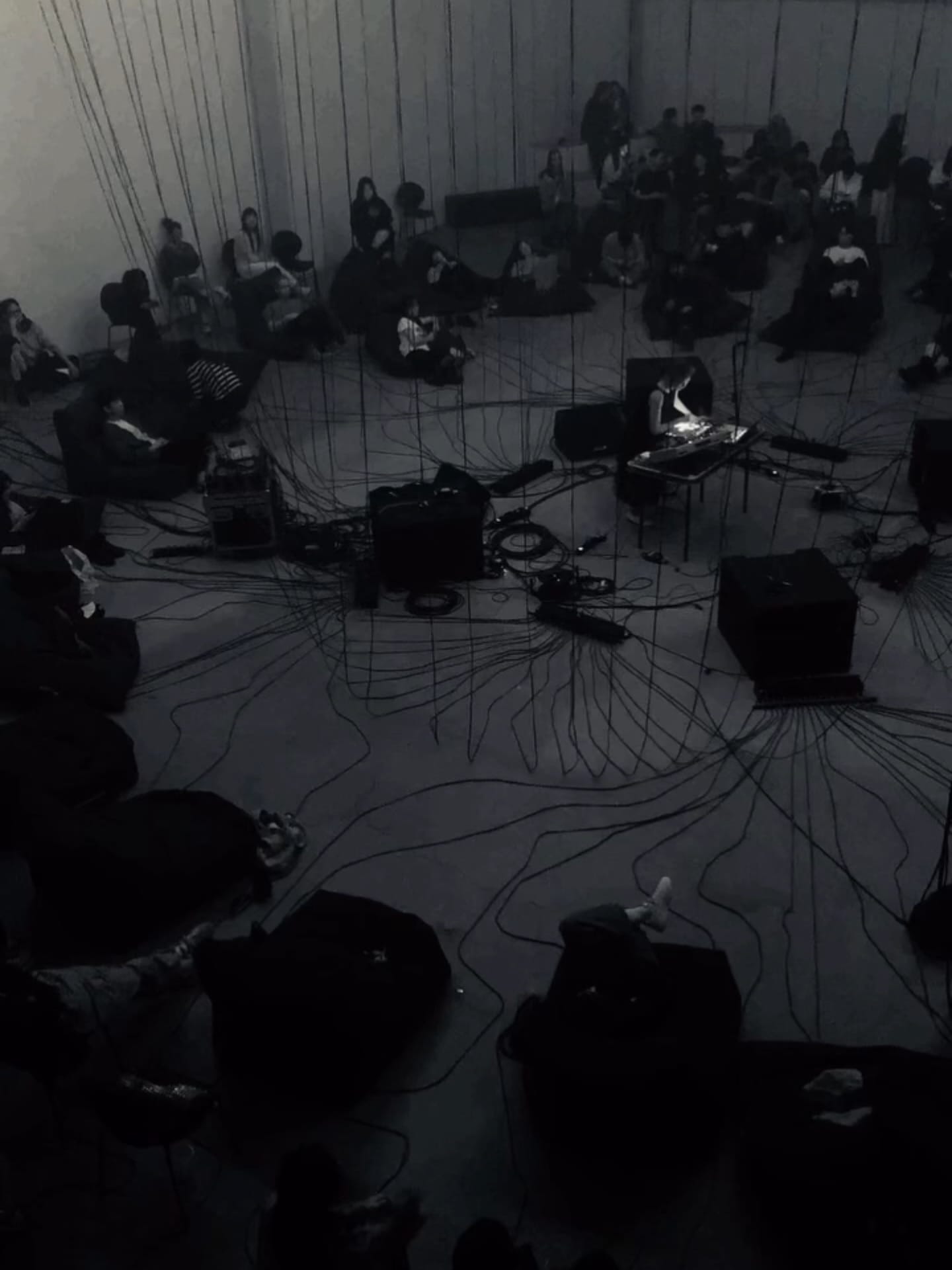
앨범을 낸 지 한 달이 지났는데도 HAIHM은 여전히 바빴다. 서울문화재단 정산 서류, 전시 리플랫 보충, Sangsu Records 컴필레이션 릴리즈. 음악 바깥의 일들이 음악만큼 쌓여 있었다. 그 틈에서 그가 발매한 정규앨범 FLOW FORM은 조용히 자기 자리를 지키고 있었다. 2021년 NOWHERE 이후 4년 만의 정규작이었다.
소리가 먼저였다
HAIHM이 전자음악으로 온 것은 장르 선택이 아니었다. 오스트리아 유학까지 다녀온 피아노 전공자가 방향을 바꾼 건 어떤 곡의 킥과 스네어 자리에 "철렁거리는 이상한 소리"가 들어 있는 것을 처음 들었을 때였다고 했다. 창작자가 될 생각은 전혀 없었다. 엔지니어를 고민했고, 소리를 다루는 일을 생각했고, 그러다 여기까지 왔다. 2008년 셀프타이틀 데뷔 앨범 haihm에 보컬이 있었던 건 그 시절 그가 할 수 있는 것을 용기 내서 해봤기 때문이고, 지금 보컬이 없는 건 "장르와 하고 싶은 것에 몰두하다 보니 자연스럽게 된 것"이다. 논리가 아니라 흐름이었다.
덜어낼수록 자신이 없어지는
Point 9를 다시 들었을 때 그는 "모든 것이 너무 집약적으로 들어 있더라"고 했다. 열정과 욕심이 가득 들어 있던 시기. 그 시기를 지나고 나서 그가 도달한 것은 소스 자체가 주는 존재감에 대한 집중이었다. "없어지고 사라지고 비워내고. 이거 하나만 있어도 좋지 않아." 그런데 정작 사운드에 대해서는 "항상 자신이 없다"고 했다. 이번 FLOW FORM 마스터링을 대여섯 번까지 반복했다는 말도 그냥 나온 게 아니었다. 유희열이 Point 9 보도자료에 "한국 최고의 사운드 디자이너"라고 썼을 때 그가 느낀 건 영광이 아니라 난감함이었다. 비워내는 방식으로 작업하는 사람이 사운드에 가장 많은 시간을 쓰고 있었다.
흐름이 형태가 될 때
FLOW FORM은 원래 13곡이었다. 경기도무용단, 국립무용단, 차진엽 안무가와의 작업, 라이브 공연에서 만들어진 트랙들. 각기 다른 시간과 상황에서 나온 곡들이었다. 처음엔 “이게 하나의 큰 줄거리를 가질 수 있을까” 자신이 없었다고 했다. 그러다 어느 날 퍼즐 맞추듯 배치했더니 한 시간짜리 흐름이 끊기지 않고 이어졌다. 그 순서를 하나도 바꾸지 않았다. NOWHERE라는 제목이 붙은 건 파트너인 공간 디자이너가 수록곡을 듣고 “규정지을 수 없는 공간에 던져진 듯한 느낌”이라고 말했기 때문이었다. 그 말을 들었을 때 눈물이 났다고 했다. 자신이 미처 언어로 만들지 못한 것을 다른 사람이 먼저 단어로 정의해 준 순간이었다. 진행자가 “나도 모르게 눈을 감고 듣게 된다”며 명상을 하느냐고 묻자 그는 웃으며 아니라고 했다. “명상을 잘 못 합니다. 명상을 할 수 있을 정도의 고요한 마음을 가진 사람이 아니어서.” 듣는 사람의 눈을 감게 만드는 음악은, 고요하지 못한 사람이 비워내고 비워내서 만든 것이었다.
인터뷰 당시 Anthracite Coffee Roasters 합정 2층에서는 전시가 이어지고 있었다. 모터가 바리솔 벽면을 흔들고, 그 벽면이 앞에 앉은 관객을 거울처럼 비춘다. 소리가 시각화되고, 보는 사람이 작품의 일부가 된다. 바이닐은 3월쯤 나올 것 같다고 했다. 마스터링을 한 번 더 해결해야 한다고.