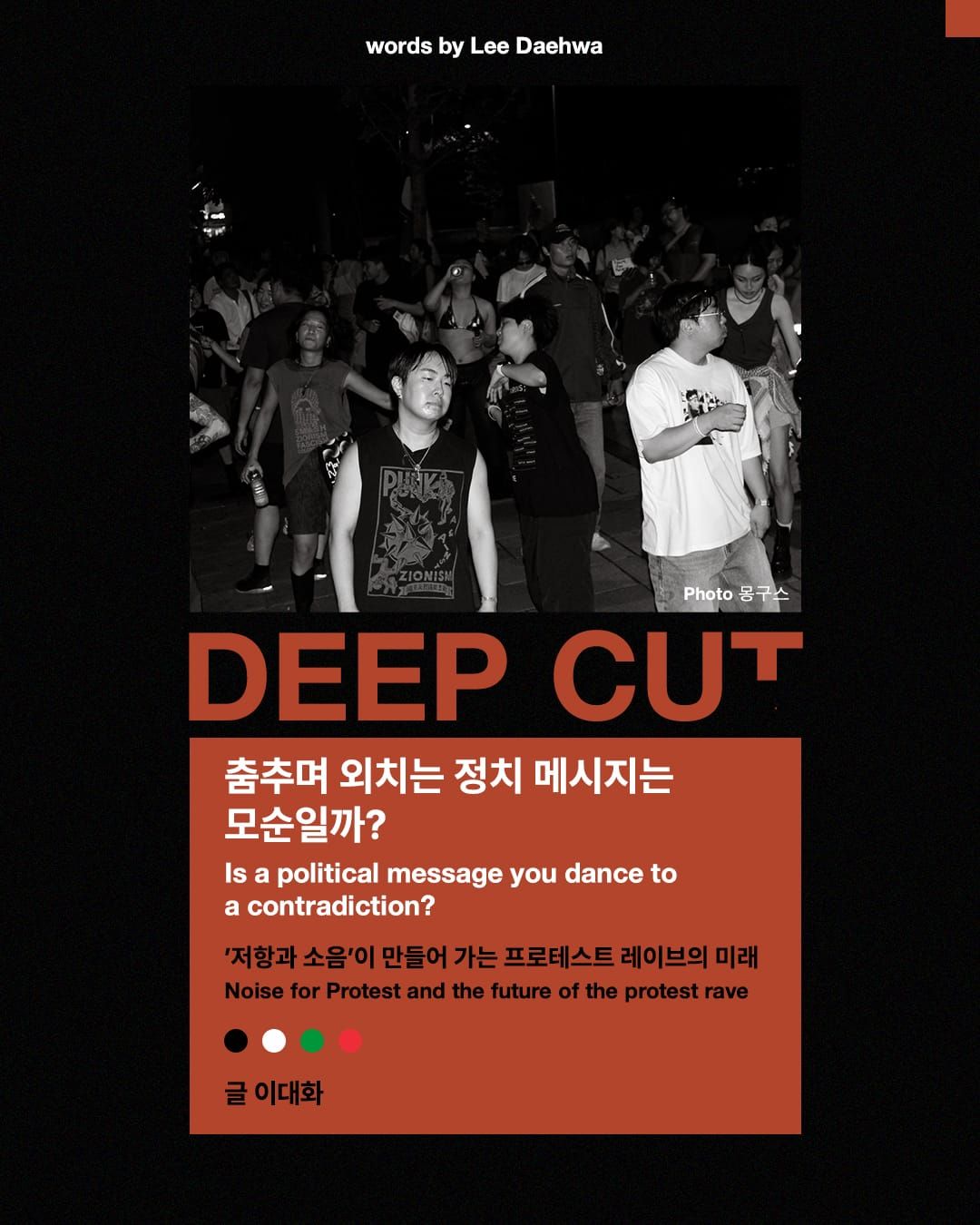
Is a political message you dance to a contradiction?
How Noise for Protest is shaping the future of the protest rave in Seoul
Words: Lee Daehwa
Photography: courtesy of Noise for Protest
Translation: MIXMIX
Standing with Palestinian liberation through DJing
In September, rapper Macklemore shouted "Free Palestine" during his opening set on Ed Sheeran's world tour, and was then forced off the remaining dates. Fellow musicians on the tour, believing the decision was unjust, announced one after another that they were pulling out too, and the story quickly became the biggest talking point in music at the time. Macklemore's Instagram post explaining his position passed eight million likes. It shows just how central the question of Palestinian liberation has become in the music world right now.
So is anyone in Korea's DJ and underground dance scene actively speaking out about the genocide in Gaza? Yes: Noise for Protest (저항과 소음, literally "Resistance and Noise"), a DJ–activist solidarity group that has been steadily active since June.
What's interesting is how they speak out against Israel: not with something like a written statement, nor with productions carrying defiant lyrics. They throw raves. They have stayed true to their identity as DJs.
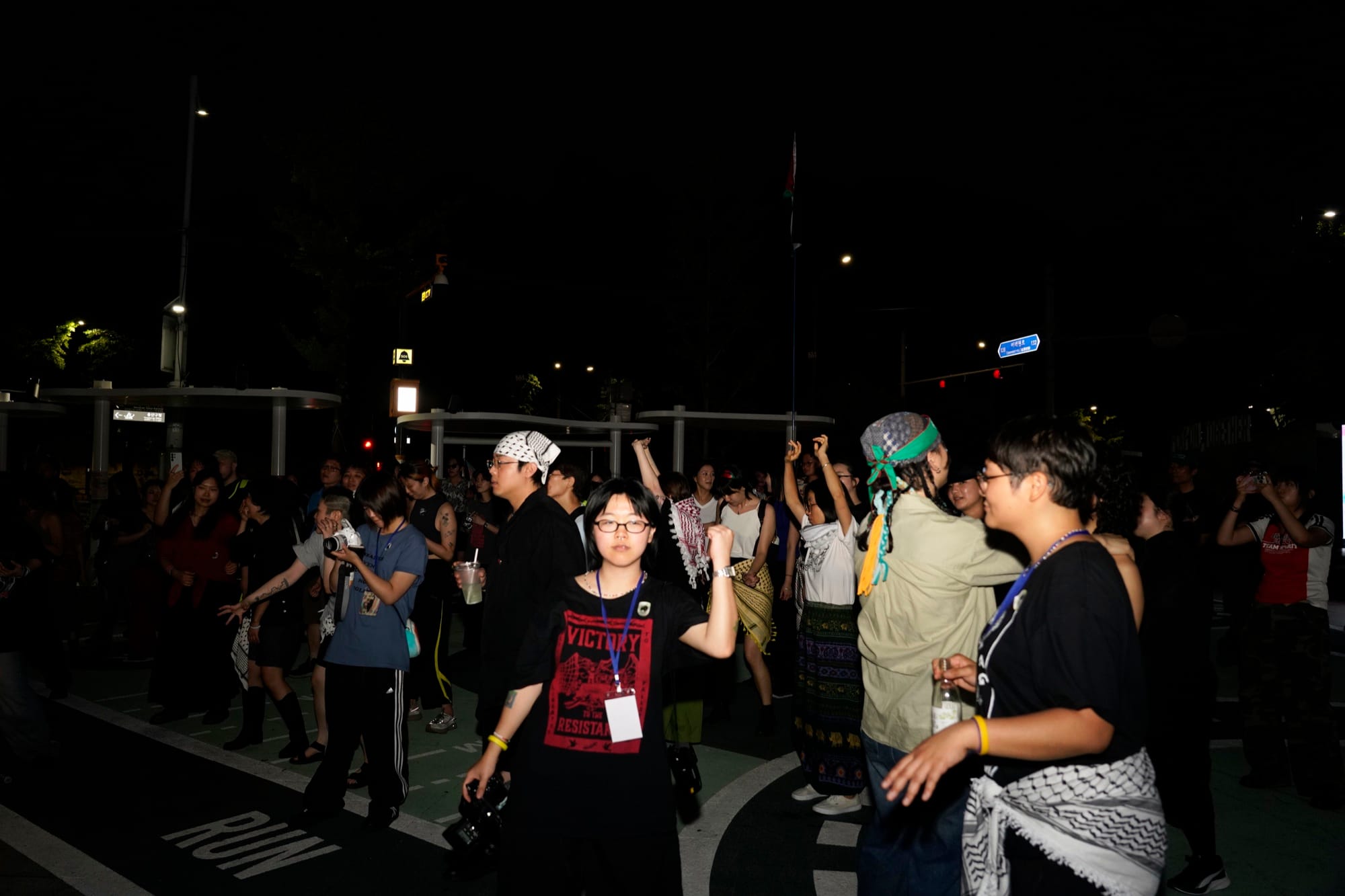
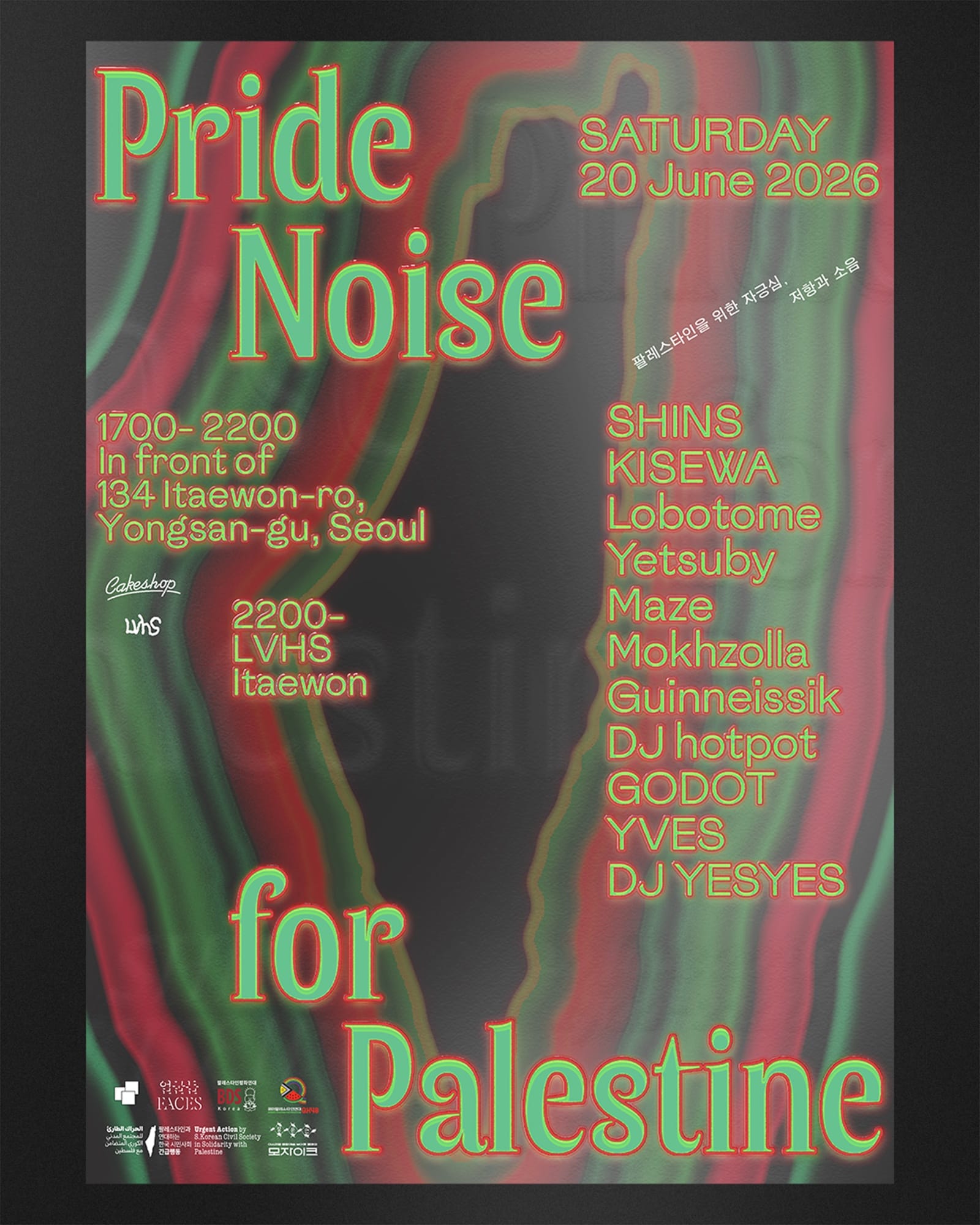
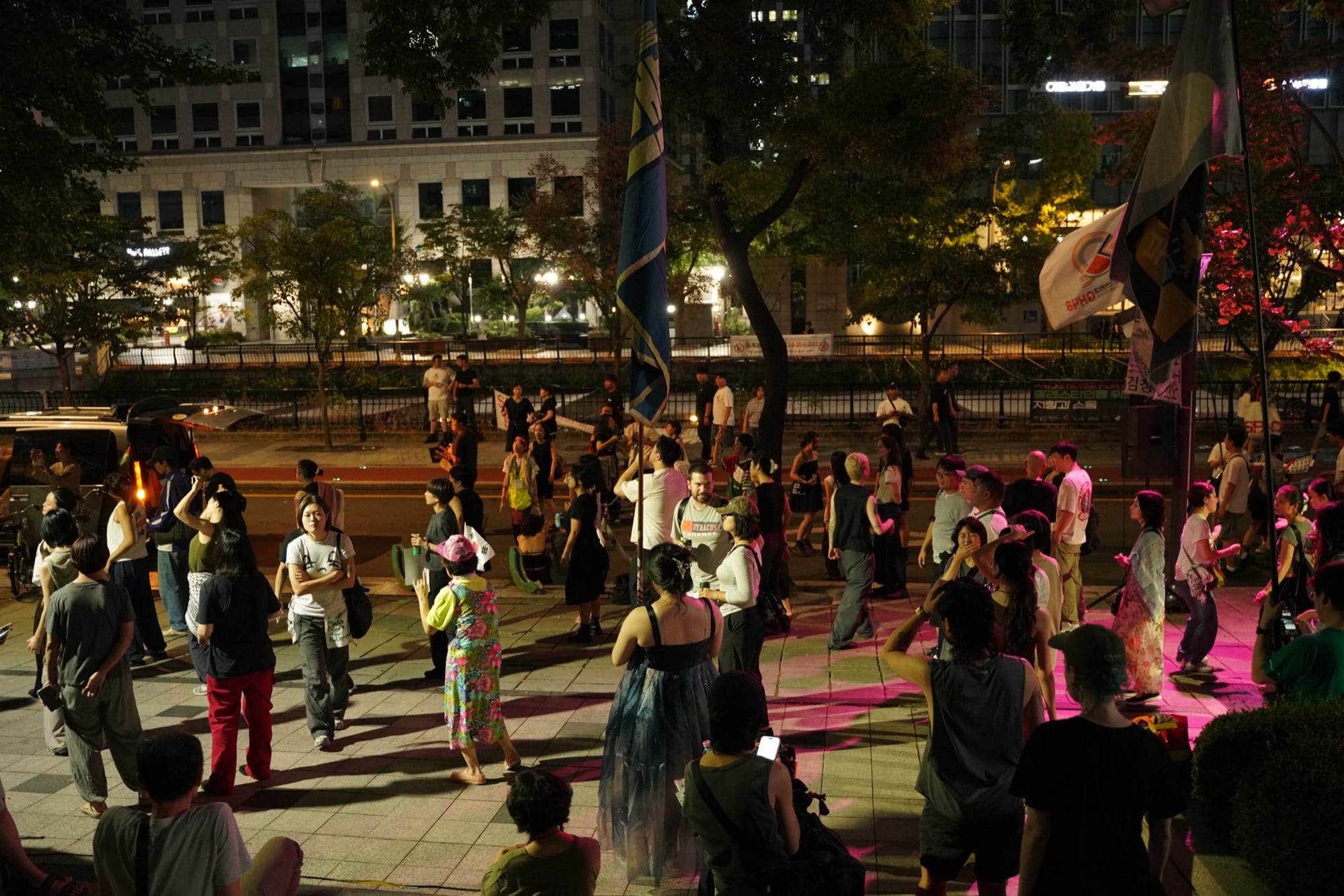
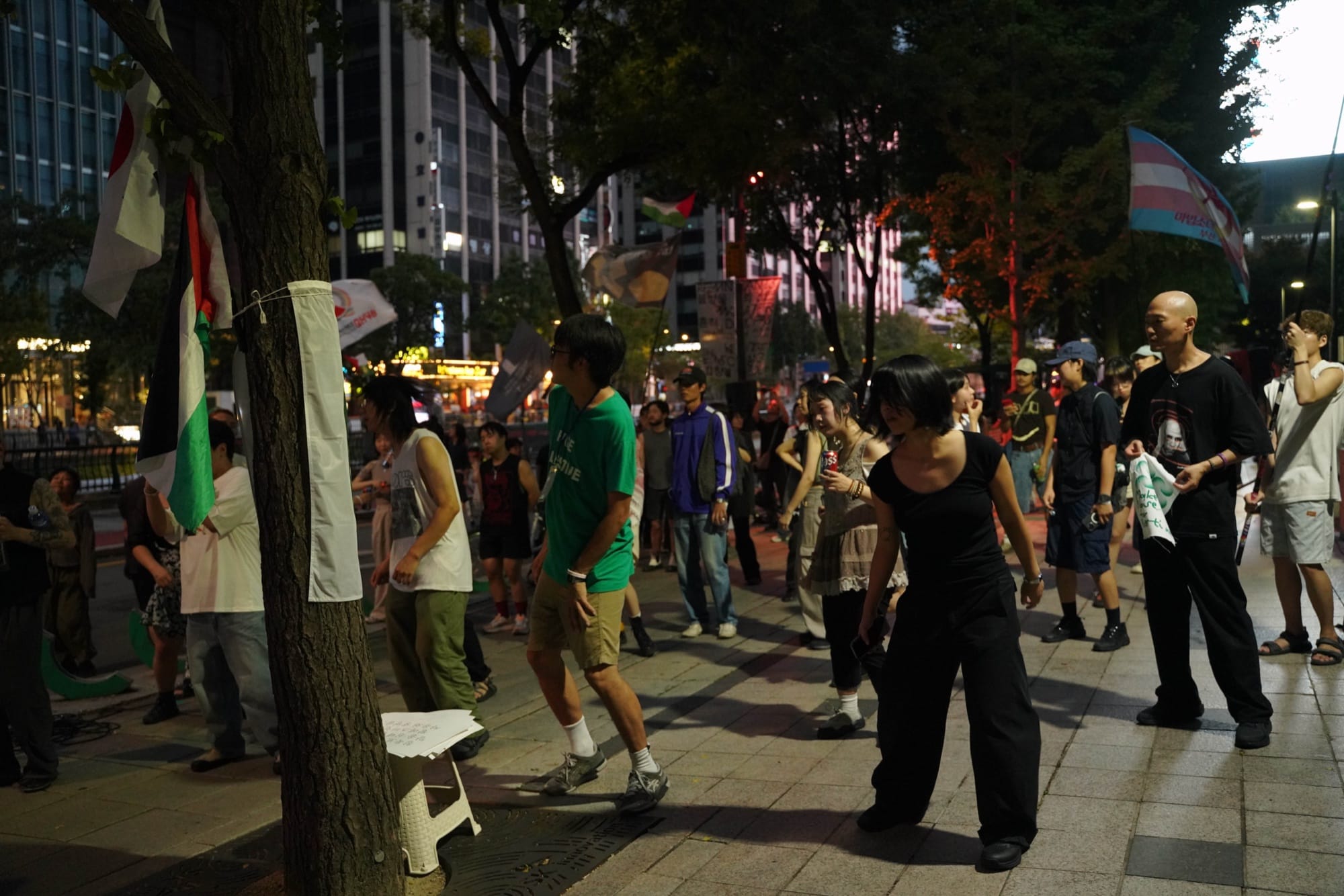
I went to their first event myself. It was 'Pride Noise For Palestine', held on June 20 at Itaewon Plaza near Noksapyeong Station — in other words, the open lot in front of the club Cakeshop. Speakers and a DJ booth were set up with their backs to Cakeshop's entrance, facing the road, and in the small fan-shaped plaza dozens of people, eyes on the DJ, were lost in their own dancing. It was a classic rave scene. The music, too, was unlike that of an ordinary rally: underground dance music made for the club. Hypnotic, repetitive beats and a deep, booming low end rang out around Noksapyeong Station. They were joining a social and political movement like anyone else, but they chose the rave, the form they know best.
It started with the 'protest raves' being held in Japan. At the end of 2025, DJ Yves came across the activities of Japanese organizers — unusual even within Japan — on social media, and decided to try holding politically engaged raves in Korea too, using them as a reference. Yves says: "Protest raves used DJing and party music, which younger generations are familiar with, to put across messages such as anti-war or anti-imperialism and to talk about political issues. That made a really strong impression on me."
It began with a DJ's proposal, but activist groups working for Palestinian liberation are equal partners. The project got underway when Yves brought the idea to Urgent Action by South Korean Civil Society in Solidarity with Palestine; later, Palestine Culture Solidarity, Palestine Peace Solidarity, MOSAIC (a campaign for the cultural and artistic boycott of Israel), the Korean headquarters of the Voyage for Palestinian Liberation, Queer Palestine Solidarity, FACES and Jeopchokmyeon joined the organizing team. DJs steeped in rave culture and activists experienced in street protest are pooling their strengths.
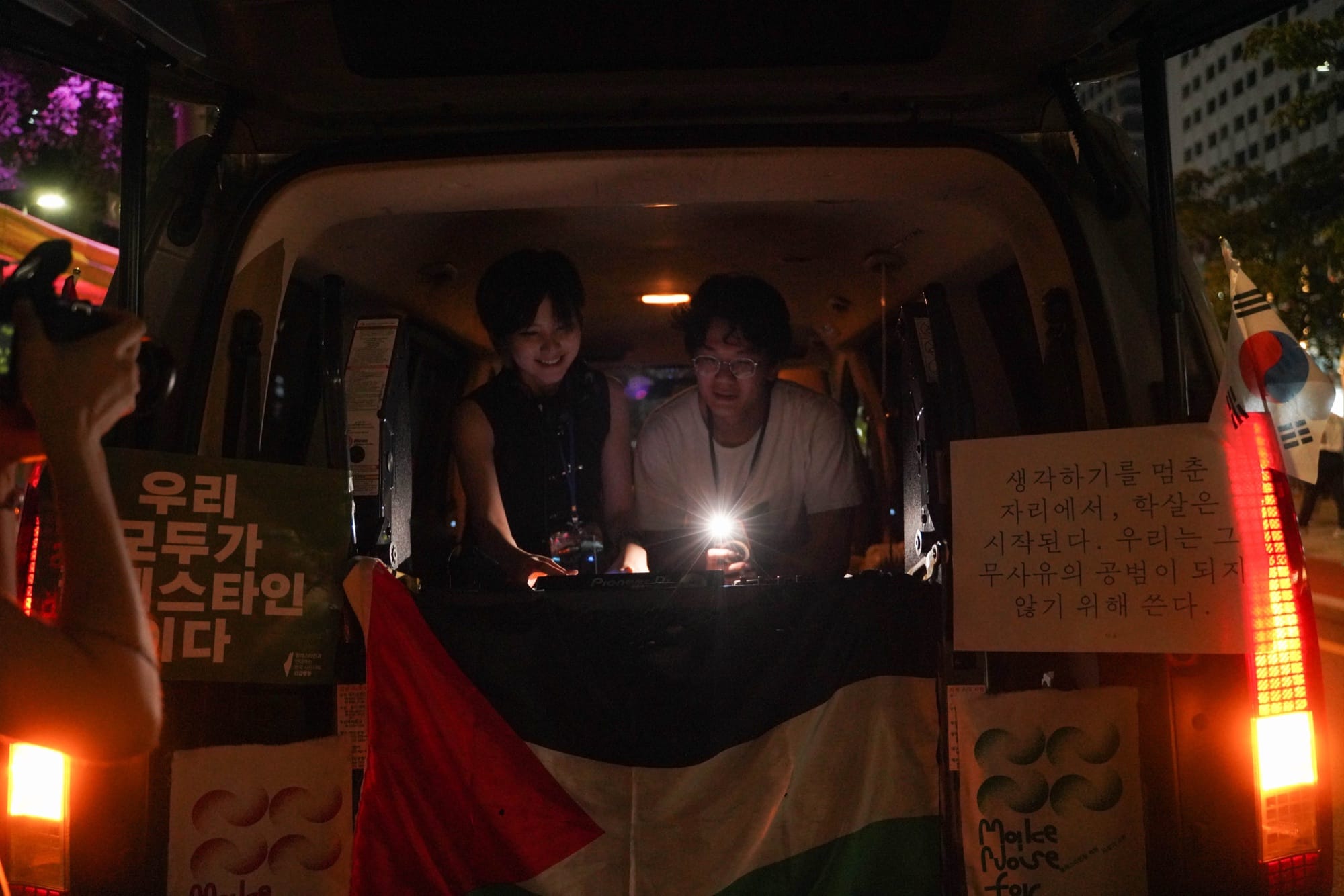
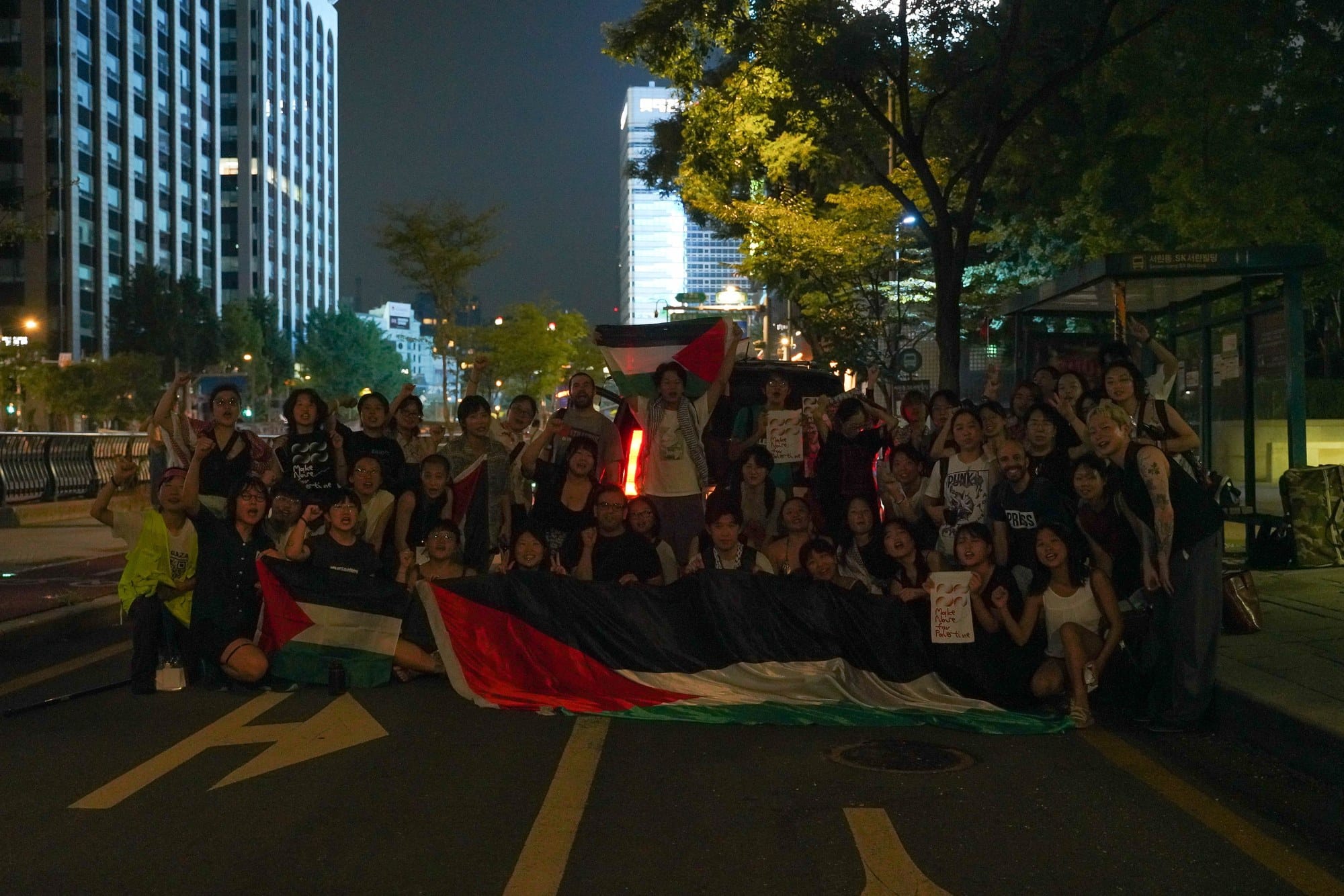
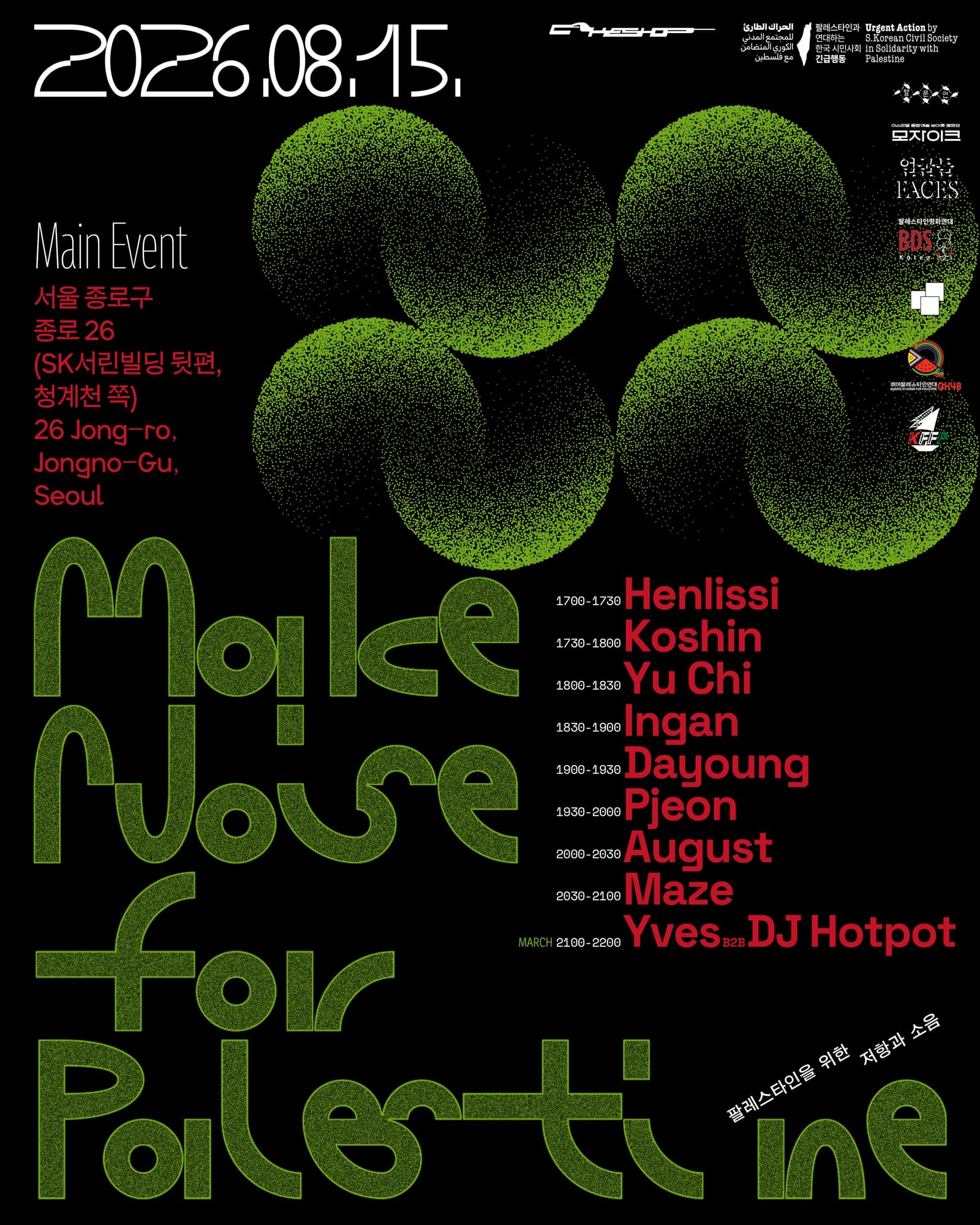
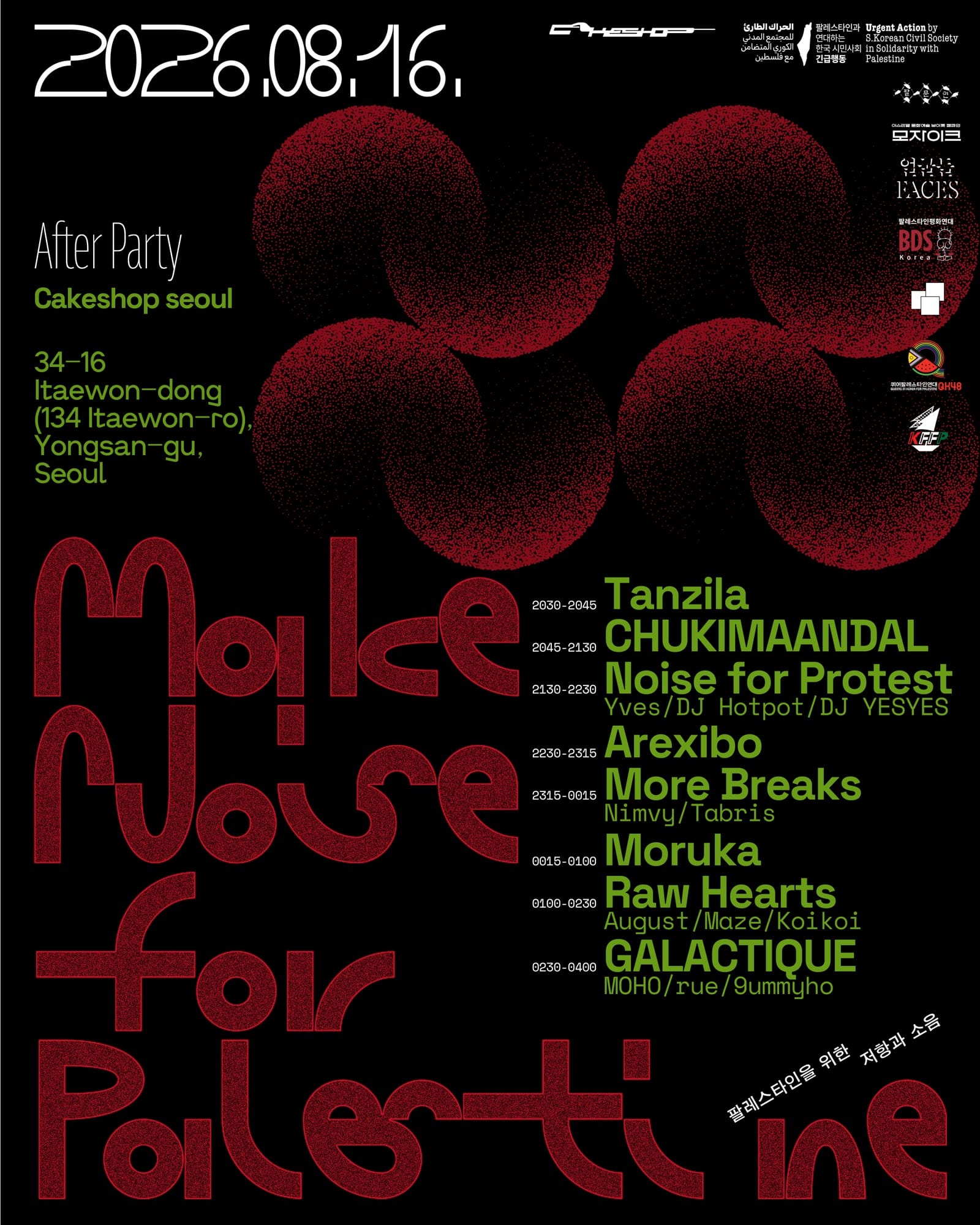
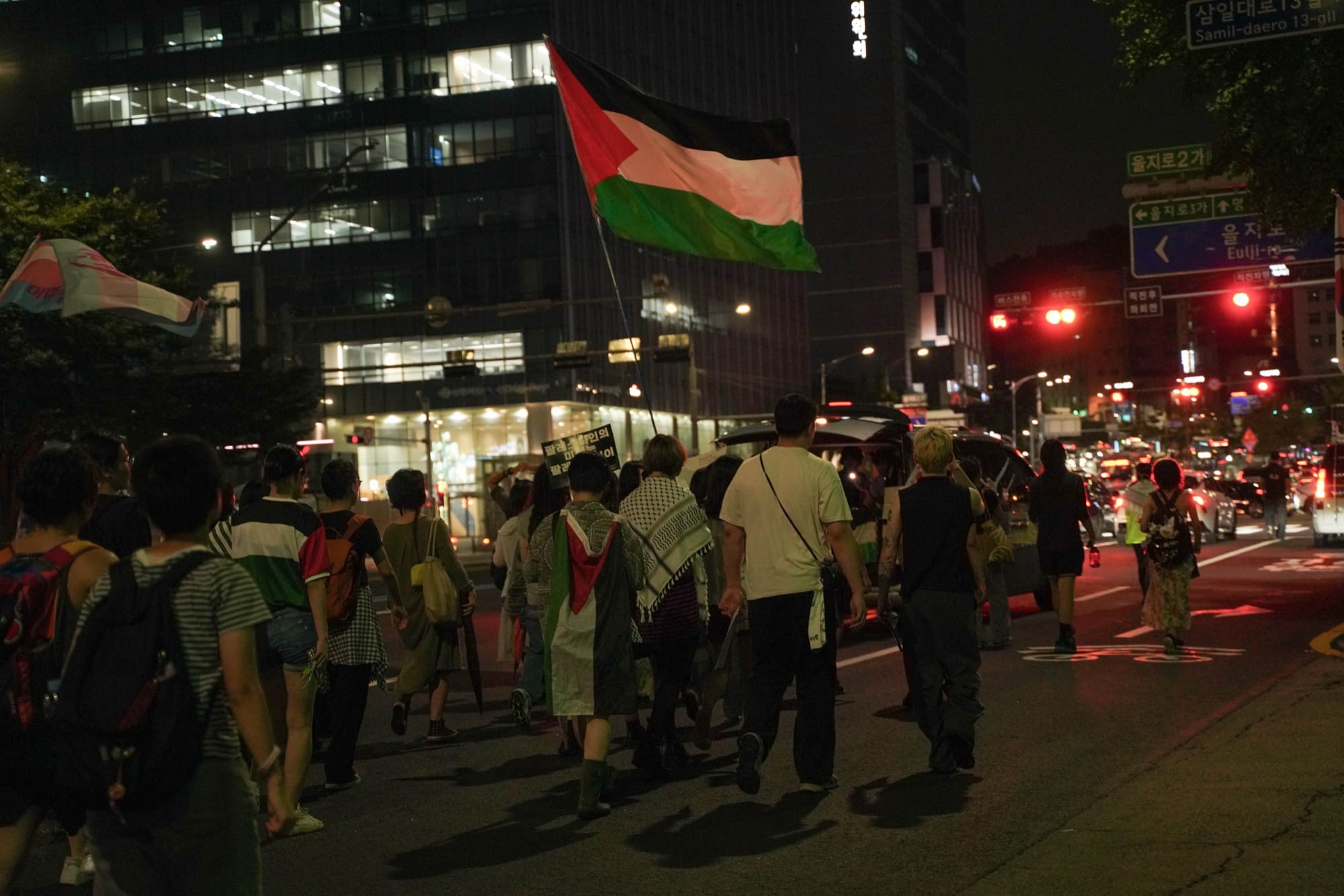
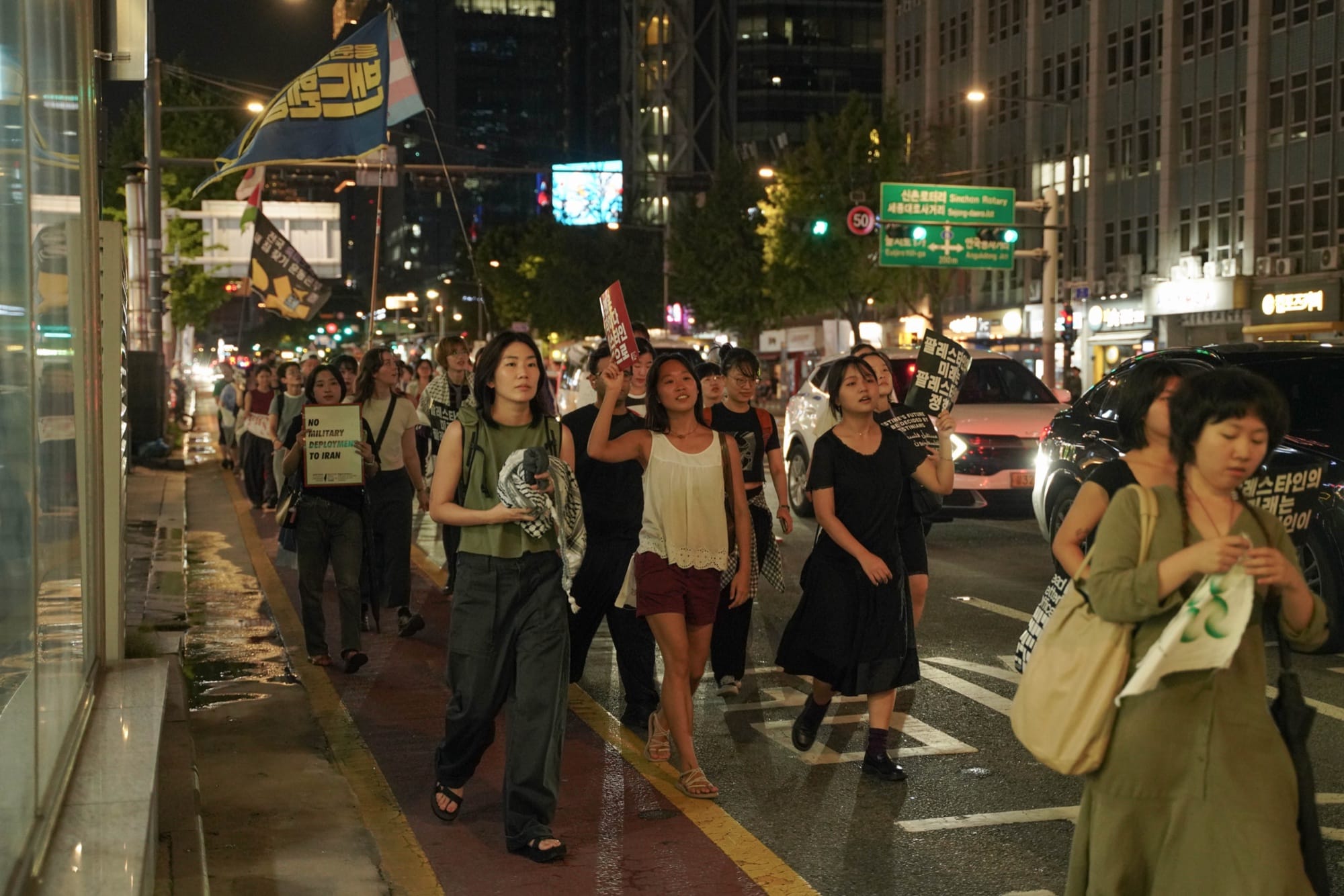
Since forming, Noise for Protest has held two raves and one talk session: 'Pride Noise For Palestine' in front of Noksapyeong Station on June 20, and 'Make Noise For Palestine' near the Israeli embassy on August 15. The second event also included a street march setting off from Jonggak Station through Jongno and Myeongdong. A vehicle carrying the DJ booth led the way, with ravers and activists following behind chanting "Free! Free! Palestine!" Roads were closed and police escorted the march.
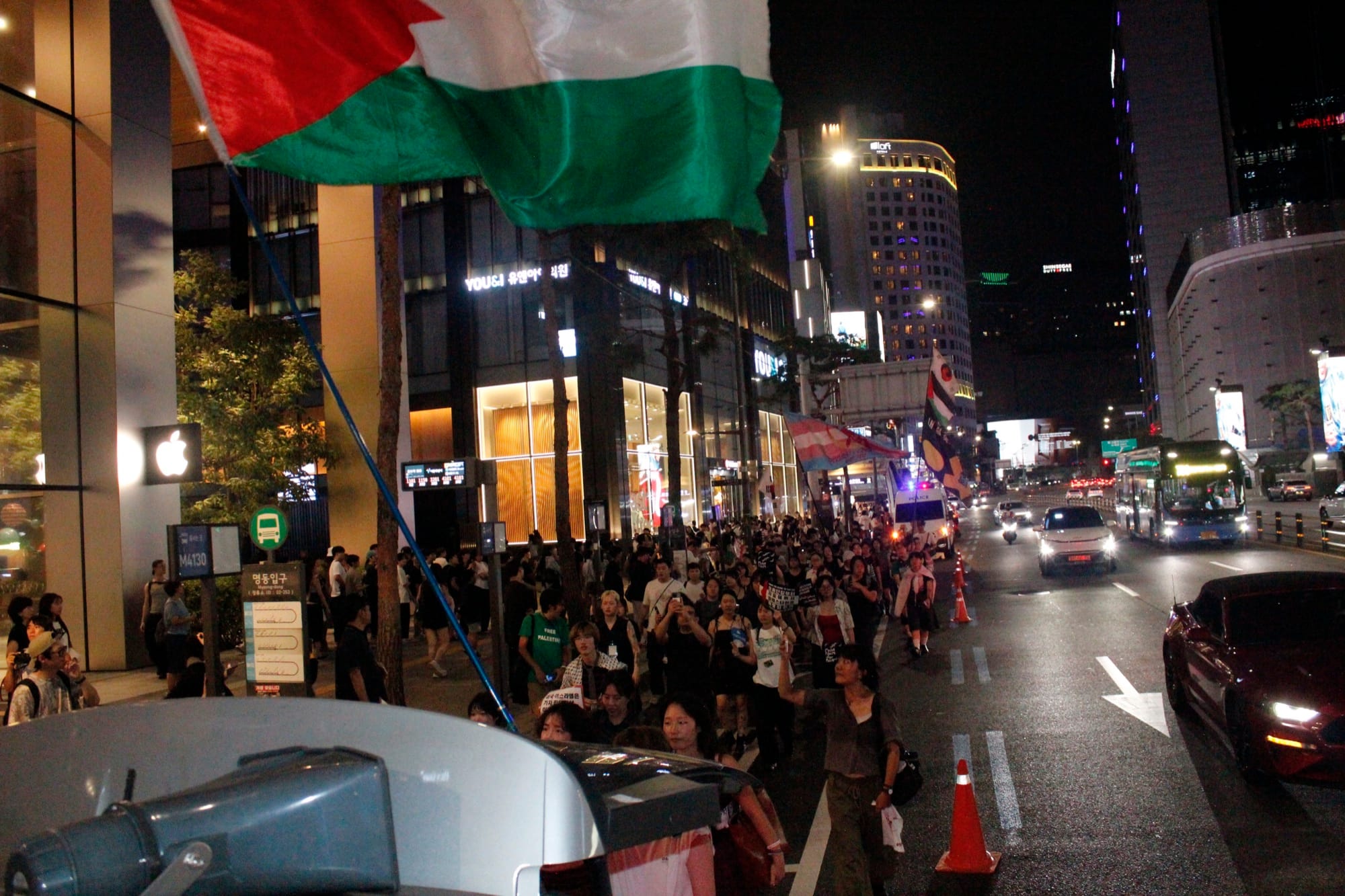
Simply throwing a party wasn't enough. On July 26, at the Chun Tae-il Memorial Hall (named after the labor activist), they held a talk session titled 'How Does Music Become Solidarity?' to explain why they put on these events. The conversation was also published as a zine.
On October 3, they joined a nationwide rally organized by Urgent Action by South Korean Civil Society in Solidarity with Palestine. The massive procession setting off from the Bosingak bell pavilion included two music trucks carrying Noise for Protest DJs. It was the day Noise for Protest first became known to the wider movement, at a large-scale rally that drew on the full strength of pro-Palestine activists. Musician Lee Lang also took the stage that day to sing 'Neukdae-ga Natanatda' (The Wolf Has Appeared).
Is it a contradiction to chant a political message while dancing?
As I mentioned, what stands out about them is that they engage in politics through raves without setting aside their identity as DJs. But precisely because of that, they also face criticism. A comment left on an Instagram post while they were preparing the first event in June is a case in point. Writing in English, the commenter said that partying in a comfortable Seoul club while people are fighting for their lives in a war zone was the strangest thing they had seen recently. By approaching solidarity as DJs — people who steer a dancefloor with music — they had run up against conventional wisdom.
The members of Noise for Protest don't take such criticism lightly. When I asked Henlissi, one of the participating DJs, how it felt to see that comment, Henlissi replied: "The situation right now is so horrific that I completely understand people being worried when they hear the words 'dance party.'"
Adding a talk session to the raves was also a way to head off any misunderstanding and carefully lay out what the project is for. According to Henlissi, they worked hard "to make it clear that the purpose of this project is to make the genocide happening in Gaza visible and to raise funds."
Since meaning mattered as much as playing good music, they thought carefully about more than the music itself when selecting tracks. Henlissi "checked far more thoroughly than usual whether the producers who made the tracks had posted pro-Israel content on social media, or leaned that way, and filtered them out." DJ Shins built a set around tracks released to support Palestine. DJ Hotpot at times played Korean protest songs (minjung gayo) mid-set or mixed in audio of chants condemning Israeli soldiers.
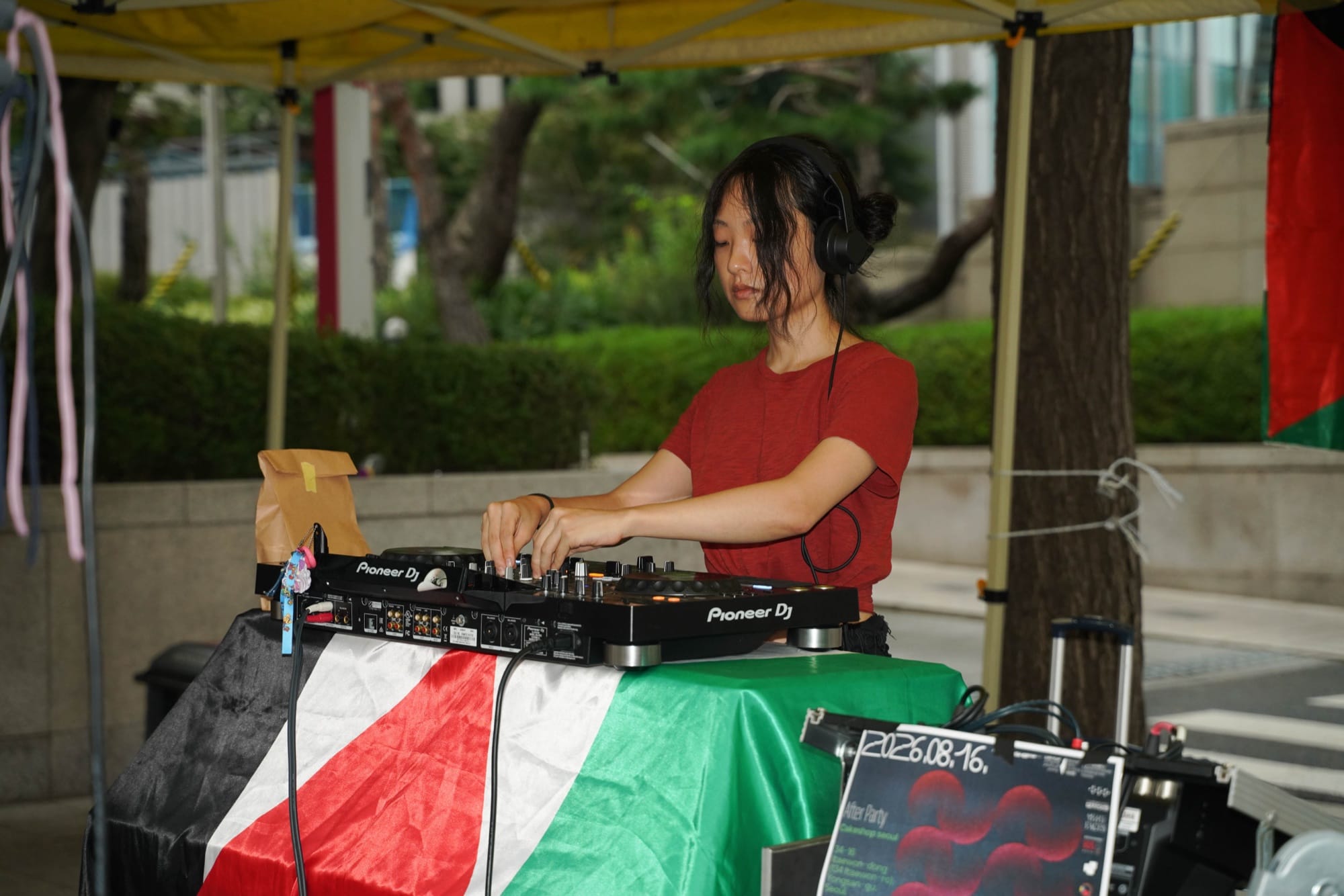
They take every possible care not to undermine the cause of Palestinian liberation, but that doesn't resolve the fundamental contradiction. Someone is dying right now. And we're here dancing?
The organizers of Noise for Protest haven't fully resolved the contradiction. But they have found an upside. For ravers and underground dance fans who sympathized with the issue but couldn't find the courage to join existing forms of protest, the raves opened an alternative path. Lowering the barrier in this way is also what DJ Yves saw in Japan's protest raves.
"When I thought about how they managed to bring people together, it seemed to me that rather than simply repeating the messages of existing rallies, they had lowered the barrier to participation a little. In a space where the line between rally and event was blurry, they presented a different kind of format and brought more people in. I felt that in Korean society, Palestine gets less attention and visibility than in other places abroad. So I thought it would be good to try a different format to connect this to more people and spread the word, and that's when I took protest raves as a reference."
That was also one of the biggest reasons Henlissi joined the organizing team. "I think Noise for Protest opened an alternative path for people who sympathized with the issue but didn't know how to take part in existing rallies. I'd been thinking a lot about Palestine, and being able to stand in solidarity through what I love and do best gave me a real sense of agency."
I had a similar experience. At first, I was interested in the way it broke the mold by blending rave and rally. But while marching through Jongno under the Palestinian flag, I was deeply moved more than once. I resolved to pay closer attention to this issue and support it from now on. Apart from the 2024–25 impeachment protests, I had rarely joined activists' rallies before. Sometimes I even found myself thinking: 'Why block the roads like this?' 'Why make so much noise in the streets?' But going out and shouting in the streets myself, I came to understand: the noise and the closures aren't meant to get in anyone's way — they are how voices with nowhere left to retreat reach the world. Without Noise for Protest, that awakening would have come later.
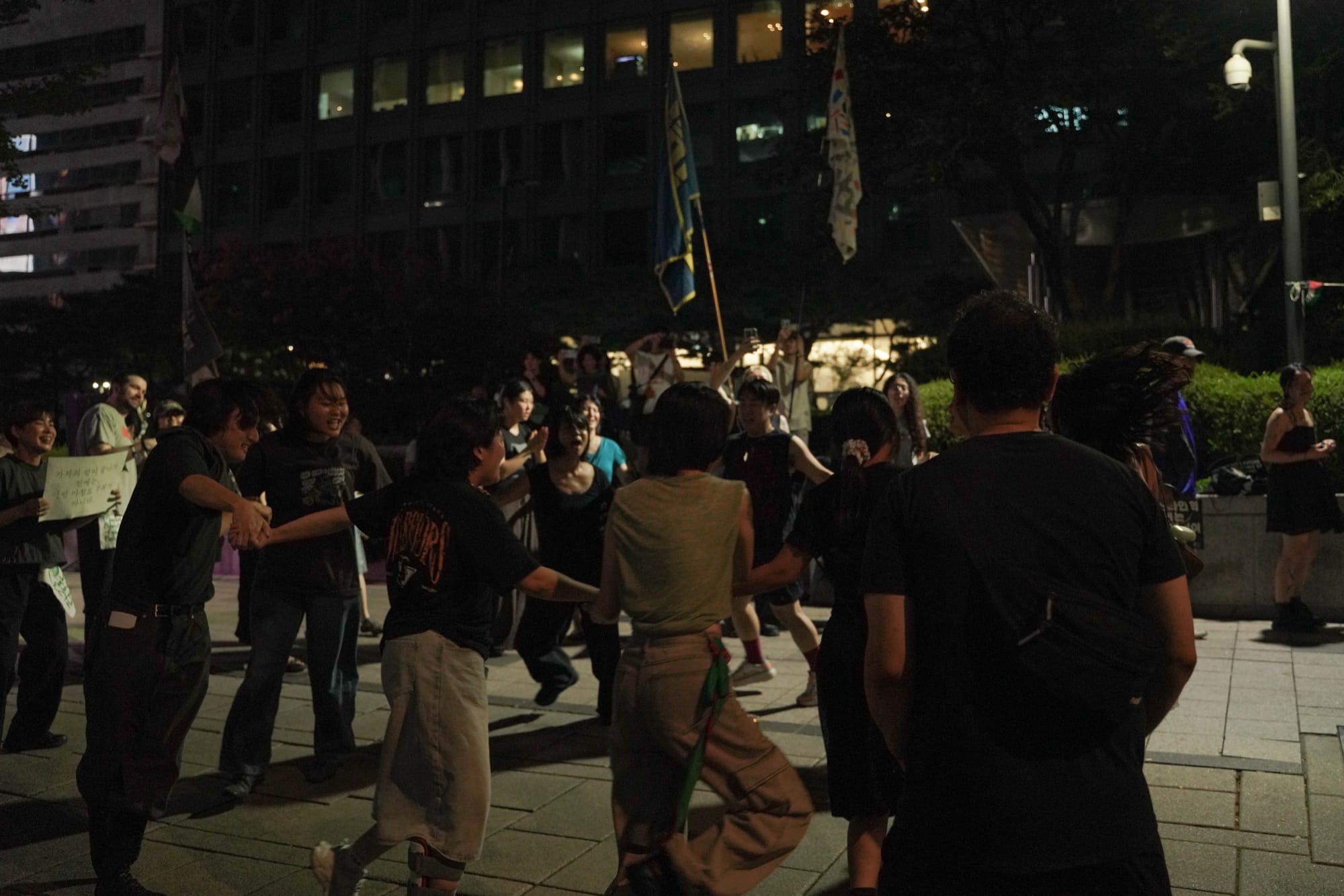
Besides, setting rave and political message against each other is a rather abstract way of thinking. Performance and dance are extremely common at ordinary rallies. Joyous rounds of ganggangsullae, a traditional circle dance, can break out to the beat of pungmul folk percussion troupes, and percussion bands sometimes play within marching columns. In reality, the two aren't complete opposites; they overlap. And has dance only ever existed for fun? There is dance for play, but there is also dance for ritual. Some see the Second Summer of Love as reviving the experience of community that had been lost in Thatcher's Britain. Some social theorists read the rave as an embodiment of what Hakim Bey called the 'Temporary Autonomous Zone.' Dance events and political rallies have as much in common as they have differences.
Henlissi makes a similar argument. "We can't ignore the concerns of people who ask how you can dance at a site of struggle. But resistance movements and music are inseparable. I think it's a problem to see performing arts as nothing more than light entertainment. Raving as a culture has also been a political space standing against oppression. I hope people won't be quick to judge it as something different just because of how it looks on the surface."
Yves speaks in a similar vein. "I think raving and dancing are often represented as something fun and entertaining, simply joyful. But dance is used in so many different ways. People dance in places of mourning and grief, and there are cultures that use dance in rituals around death. I think dance and music can carry different messages depending on what we pursue within them."
With all this in mind, rather than criticizing it in principle, it may be more constructive to work out concrete approaches that fit. For example, when choosing BPMs, DJ Yves checked whether they suited chanting. Too fast or too slow, and people run out of breath or the energy drops off. "I focused on the chants. I wondered whether there was music that would make chanting easy, so I picked music with precise drums or a clearly audible 4/4 beat — music that could drive the chanting."
Henlissi was careful that it "shouldn't become difficult music just for people who already like electronic music." Henlissi adds: "I tried to lower the barrier so that everyone who gathered there could take it in naturally." At the first event in June, activists working as staff walked around with large printed QR codes stuck to their backs. Scanning one with a smartphone led to a donation page supporting Gaza. In this way, they are still feeling their way towards the best approach, step by step.
Can a form halfway between rally and rave, like Noise for Protest, last or become widespread? Even the organizers can't say for sure at this point. But they hope a "bigger wave" will form. Yves says: "I hope that people who watched our events with interest, or who happened to be near Itaewon that day and got swept up in it, will think, 'I could do something like this as a DJ or musician too.' I'd love to see people here and there each throwing their own benefit parties or putting together compilations. That's how solidarity spreads."
For it to spread, more people need to take part. Asked if there was a message for readers, Yves answered: "Even if you're not a DJ — if you're doing something in the music scene, if you enjoy music, or if you're active in the scene through photography, video or design — please feel free to get in touch. Rather than just watching, if you tell us 'I'd like to try this together' or 'I want to be part of this,' I think we could plan new things together that we couldn't create on our own. I want to lower the threshold for solidarity. If you'd like to join, please don't overthink it — just reach out. Above all, I want to say that we hope people in the music scene will join us."